

Global GDP is projected to grow at 2.6–3.0% in 2026. For businesses operating across South Asia, the Middle East, and Africa, the year ahead is defined by tighter capital conditions, shifting trade flows, and geopolitical pressures that are shaping daily decisions.
Regional dynamics show divergent patterns. Gulf economies are accelerating non-oil sector growth while managing energy price volatility. West African markets are navigating monetary normalization alongside structural policy shifts. South Asian economies face persistent inflation and currency pressures that constrain credit availability.
Here is what matters most for leaders in markets like Saudi Arabia, Nigeria, Bangladesh, Pakistan, Ghana, Qatar, Bahrain, and Tanzania.
Geopolitics Is Now a Business Operations Issue
Regional tensions continue to affect investor confidence and cross-border trade corridors. Transport routes face potential disruption as competing regional interests reshape connectivity infrastructure.
For Gulf markets specifically, energy dynamics are shifting. Production adjustments and rising inventories are softening price benchmarks, which reinforces why Saudi Arabia, Qatar, and the UAE are accelerating diversification into non-oil sectors. Gulf economies are expected to maintain a robust non-oil GDP contribution in 2026.
What this means operationally:

Build geopolitical risk explicitly into planning cycles and just compliance reviews

Map supply chain exposure to corridor-level disruption risk

In energy-linked markets, prepare for continued price volatility regardless of production agreements
Gulf Markets: Moving Past Oil Dependence
Saudi Arabia’s GDP is expected to grow around 4% in 2026. The focus has shifted from headline giga-projects toward phased, commercially disciplined execution. AI hubs, digital infrastructure, renewable capacity, and a 15GW renewable rollout are the near-term priorities. The NEOM PIF allocation was cut by roughly 20%, signaling a preference for measurable returns over scale.
The UAE continues to lead regionally in AI adoption and advanced manufacturing. Qatar’s investments in renewables, hydrogen, and logistics infrastructure position it as a long-term growth story.
For businesses in the Gulf:

Opportunities are concentrated in digital infrastructure, data centers, clean energy, and manufacturing

The US-Saudi strategic package is expected to deepen defense, semiconductor, and nuclear cooperation, creating downstream supply chain and technology transfer opportunities

Compliance complexity around cross-border transactions is easing following Saudi Arabia's removal from FATF grey list considerations
Nigeria and Ghana: Reform Progress, Persistent Pressures
Nigeria’s GDP is forecasted at 3.5% growth in 2026. Inflation is expected to soften to around 13%, still well above the Central Bank’s target, which limits aggressive rate cuts. The elevated rate environment will constrain credit early in the year.
Nigeria’s removal from the FATF grey list is a meaningful development. Cross-border transaction flows are expected to improve, compliance friction for corporates should reduce, and access to international financing should expand. Telecoms, digital services, film, and online retail are growth sectors as purchasing power stabilizes.
Ghana is expected to benefit from easing inflation and gradual monetary loosening. Subsidy reductions will shift consumption patterns, requiring consumer-facing businesses to adjust pricing and product mix.
Key watch points for West Africa:

US visa restrictions covering 26 sub-Saharan African countries took effect January 2026, affecting business travel, staff mobility, and remittance flows. Nigeria, which relies on the US and UK for around 60% of remittances, may see household consumption soften

Rare earth and critical mineral investment is accelerating across sub-Saharan Africa, with West African markets likely to see increased FDI from European and other partners

The African Growth and Opportunity Act (AGOA) renewal remains uncertain. Businesses reliant on US market access should be stress-testing that exposure now
Bangladesh and Pakistan: Navigating External Pressure
Both markets face a tougher external environment in 2026. The global textile sector remains high-risk according to Dun & Bradstreet’s Sector Risk Ratings. Bangladesh faces particular pressure given slow technology adoption in its core apparel sector, even as demand from Western markets remains the primary revenue driver.
For Pakistan, tighter external financing conditions and currency volatility continue to constrain the operating environment, consistent with the broader pattern across frontier markets flagged in the report.
Priorities for South Asian markets:

Automation investment in textiles is no longer optional for maintaining export competitiveness

Working capital management is critical given tight liquidity and elevated financing costs

The global supply chain continuity index rebounded in Q1 2026 after a contractionary 2025, suggesting some stabilization in logistics conditions that benefits export-oriented manufacturers
Tanzania and East Africa:
Mineral Opportunity, Execution Risk Tanzania sits within a broader sub-Saharan Africa trend the report identifies as significant: intensified geopolitical competition for critical minerals. The DRC, Tanzania, and other East African markets are expected to see higher capital inflows targeting cobalt, copper, rare earths, and gold, particularly from European and Australian partners.
This creates real opportunity in mining services, logistics, and mid-stream processing. However, the report is direct that firms entering these markets will face elevated ESG, regulatory, and security-related operating costs.
Three Themes Cutting Across All Markets

Supply chains are being rewired, not simplified: The Global Business Supply Chain Continuity Index rose in Q1 2026 after a mostly contractionary 2025. Improved tariff clarity and stabilizing logistics conditions are driving cautious optimism. But the structural shift toward regionalization and nearshoring continues. Businesses that have not yet mapped concentration risk by corridor and supplier are exposed.

AI adoption is rising, but returns are incremental: Across regional markets, AI is moving from pilot to embedded function in faster-moving sectors. The Gulf leads regionally. Expectations should remain calibrated. Incremental gains in automation, demand forecasting, and cost optimization are the realistic near-term value case rather than transformational productivity leaps.

Sustainability is becoming a commercial filter: Over 56% of businesses globally identified sustainability and green initiatives as a top growth opportunity in Q1 2026. ESG compliance frameworks including the EU Carbon Border Adjustment Mechanism are directly affecting export competitiveness for manufacturers in South Asia and Africa. Companies that treat this as a compliance task rather than a commercial strategy are likely to find market access increasingly constrained.
The Bottom Line
2026 is not a year for passive strategy. Growth is available, but it is concentrated in specific sectors, markets, and business models. The organizations that outperform will be those that have tightened their balance sheets, built visibility into their supply chains, and are investing selectively in digital and sustainability capabilities.
For D&BSAME markets, the near-term priorities are clear: manage geopolitical and currency risk actively, prepare for continued tightening in trade policy, and position for the critical minerals and digital infrastructure investment cycles that are already underway.
Manually Vetting Vendors? Save Time, Reduce Risk, & Stay Compliant
Dun & Bradstreet’s Vend-R platform delivers verified, risk-rated vendor profiles in one place, cutting vetting time, supporting compliance standards, and helping you avoid exposure to unreliable or noncompliant suppliers.

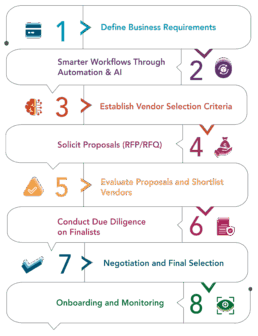
A clearly defined vendor selection process helps corporations reduce uncertainty and make informed, high stakes decisions with confidence. By following these key steps, from defining business needs to onboarding and monitoring, organizations can ensure that each vendor relationship is built on a foundation of due diligence, strategic fit, and long term value. In the next blog, we’ll explore how to optimize these processes further by embedding best practices that improve efficiency, compliance, and performance across the procurement lifecycle.