

The effectiveness of AI isn’t driven by algorithms alone. It is shaped by a solid data foundation.

Is AI Forcing A Closer Look At Data?
AI has become a serious area of focus for businesses looking to improve efficiency, support decision-making, strengthen customer experience, and create long-term operational value. As organizations move from interest to implementation, the conversation is becoming more grounded. Questions around AI adoption are no longer centered only on tools or models. They are increasingly tied to the data environments those systems rely on.
This is one reason data readiness is gaining attention in enterprise AI discussions. Businesses are taking a closer look at whether their data is structured, reliable, accessible, and governed in ways that can support meaningful AI use. As AI becomes more integrated into business processes, the condition of the underlying data may influence how useful and scalable those efforts become.
For organizations assessing AI opportunities, this makes data readiness a practical consideration. It offers a way to evaluate whether the foundations are in place to support AI initiatives over time across broader business use.
Understanding What Makes Data AI-Ready
At a high level, AI-ready data refers to data that is in a condition to support AI applications effectively. It does not refer to one fixed standard or a universal benchmark, rather, it is better understood as a set of characteristics that help make data more usable in AI contexts.
Several qualities are often associated with AI-ready data:
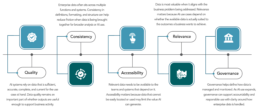
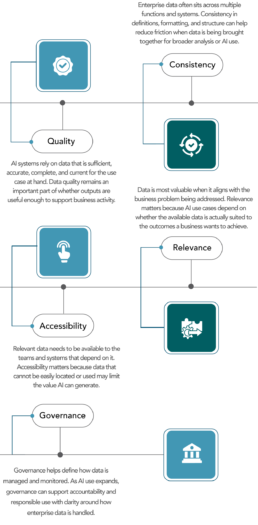
These qualities help frame AI-ready data as more than a technical consideration. They show why data readiness is becoming part of a broader business conversation around AI value and implementation.
How Data Readiness Is Shaping AI Adoption
As AI becomes more embedded in business planning, data readiness is becoming more visible for practical reasons. Organizations are paying closer attention to whether their existing data foundations can support the scale, reliability, and usability that enterprise AI requires.
One important factor is trust. AI may help surface patterns, insights, and recommendations at speed, but business users still need confidence in the information behind those outputs. The reliability of AI is often shaped by the reliability of the data it draws from. That makes data readiness relevant to how AI is received, interpreted, and acted upon across the business.
Usability is another reason the topic is gaining ground. Many businesses operate across fragmented data environments, with information spread across different platforms, business units, and workflows. In these environments, AI adoption can depend not only on the sophistication of the technology, but also on how easily relevant data can be accessed and used. Data readiness becomes part of the broader effort to make enterprise systems more workable for AI deployment.
Scale is also shaping this conversation. Early AI pilots may be built around selected datasets with focused preparation. Wider adoption across functions tends to bring greater attention to how data is structured, shared, and maintained. As AI use expands, organizations often need a clearer view of whether their data can support broader implementation in a consistent and manageable way.
Decision-making forms another reason data readiness is receiving more attention. AI applications are often linked to areas such as operations, customer engagement, forecasting, risk assessment, and workflow support. In these settings, the value of AI is closely tied to whether the underlying data can support outputs that are relevant and dependable enough for business use.
This has made data readiness a more important part of the AI conversation. It gives organizations a way to assess whether the conditions around their data are strong enough to support meaningful AI use across time and context.
Key Areas Businesses May Need to Re-Examine
For businesses beginning to evaluate their data foundations, a practical review can help clarify where they stand. This is not necessarily about solving everything at once. It is about identifying the conditions that may influence how effectively AI can be used.
A few areas are especially worth examining:

Where Key Data Sits
Businesses may need a clear understanding of where their most important data resides. In many organizations, critical data is distributed across departments, each with platforms and legacy systems. Visibility into where this data sits can help surface structural gaps and access limitations.

How Reliable It Is
Reliability remains central to AI readiness. Businesses may need to examine whether their data is sufficiently current, complete, and accurate for the intended use. This can shape how useful AI outputs are in everyday business settings.

Whether It Is Usable Across Systems
AI often depends on data being connected across systems and workflows. Organizations may need to consider how easily information can move between platforms, and whether integration barriers affect its usability.

Whether Governance Is in Place
Governance provides the structure around ownership, access, stewardship, and accountability. Businesses may need to assess whether the right governance mechanisms are in place to support responsible and coordinated data use.

Whether It Aligns With Intended AI Use Cases
Data readiness is closely linked to purpose. Businesses may need to consider whether the data they hold is relevant to the outcomes they want AI to support. Alignment between data and use case can shape whether AI efforts remain practical and business-focused.
These considerations can help organizations build a clearer picture of where they are ready, where they may face friction, and where additional attention may be needed before expanding AI use further.
Building the Right Foundation
As enterprise AI conversations become more practical, data readiness is emerging as an important part of how businesses assess AI potential. Organizations are paying closer attention to the quality, accessibility, governance, and relevance of their data as they consider how AI can support long-term value.
This makes data readiness a useful lens for AI planning. It helps businesses evaluate whether their data foundations can support AI in ways that are dependable, usable, and aligned with real business needs. For organizations beginning that evaluation, the condition of the data environment may play an important role in shaping what AI can deliver over time.
In that sense, AI readiness begins well before deployment. It starts with the data that supports it.
Manually Vetting Vendors? Save Time, Reduce Risk, & Stay Compliant
Dun & Bradstreet’s Vend-R platform delivers verified, risk-rated vendor profiles in one place, cutting vetting time, supporting compliance standards, and helping you avoid exposure to unreliable or noncompliant suppliers.

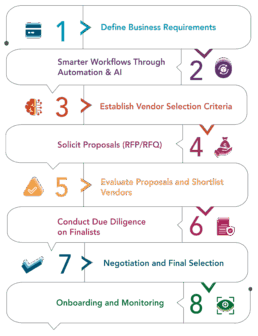
A clearly defined vendor selection process helps corporations reduce uncertainty and make informed, high stakes decisions with confidence. By following these key steps, from defining business needs to onboarding and monitoring, organizations can ensure that each vendor relationship is built on a foundation of due diligence, strategic fit, and long term value. In the next blog, we’ll explore how to optimize these processes further by embedding best practices that improve efficiency, compliance, and performance across the procurement lifecycle.