
AI is being adopted at a pace that few anticipated. What is becoming clearer as that adoption deepens is that the technology is only part of what determines whether it works.
AI is being adopted at a pace that few anticipated. What is becoming clearer as that adoption deepens is that the technology is only part of what determines whether it works.

Before the Investment, Before the Model
Organizations are increasing investment, and building internal AI strategies with more seriousness than at any point before. The pressure to move fast is real, and so is the expectation of results.
But a pattern has emerged. Many AI initiatives are not delivering the outcomes businesses had anticipated. Projects stall after the pilot phase. Outputs are questioned. Adoption slows. In some cases, initiatives are paused or discontinued entirely. The instinct is often to examine the technology, the model, the platform, the configuration. The more useful question may be simpler: what was the data like before any of that began?
For many organizations, AI challenges begin not with the tool but with the foundation beneath it. Data that is incomplete, inconsistent, outdated, or difficult to access can shape what AI is able to produce, and how useful those outputs are in practice.
What AI Inherits From Your Data
AI systems learn from data. The patterns they surface, and the recommendations they make are all shaped by what they have been given to work with. When that input is weak, the output tends to reflect it.
Several data conditions tend to affect AI performance:

Incomplete inputs
When data is missing or partial, AI systems fill gaps in ways that may not reflect reality. Outputs built on incomplete information can be unreliable, and in business settings, unreliable outputs tend to erode confidence quickly.

Inconsistent records
Enterprise data is rarely uniform. Information about the same customer or transaction may be recorded differently across teams and systems. Inconsistency makes it harder for AI to draw accurate connections, and the downstream effect on outputs can be significant.

Outdated information
AI systems depend on data that reflects current conditions. When the underlying information is stale, outputs may be technically generated but contextually wrong. In fast-moving business environments, acting on outdated AI outputs can create real operational risk.

Siloed systems
Many organizations hold data across platforms and business units that do not communicate well with each other. When AI can only access part of the available information, the picture it builds is incomplete, and the usefulness of its outputs is reduced accordingly.

Weak governance
Governance shapes how data is managed and made available. Without clear ownership and oversight, data quality tends to degrade over time, and AI systems absorb that degradation into their outputs.
These are not edge cases. They describe common data environments in large organizations, and they represent conditions that AI is not equipped to correct on its own.
When Weak Data Reaches the Business
The business implications of weak data in AI are practical and significant.
When AI outputs are inconsistent or unreliable, business users notice. They begin to apply workarounds, or disengage from the tool entirely. Over time, that loss of confidence makes adoption harder to sustain as teams are less likely to integrate AI into their workflows, and the reach of AI efforts across the organization narrows, reducing the return on what are often substantial investments.
Scaling compounds the issue. Early pilots are often built around carefully selected or cleaned datasets, which can make initial results look stronger than they are. When organizations attempt to expand AI use across more functions and varied use cases, and integrate more data sources, the cracks in the data foundation become more visible. What worked in a controlled environment may not hold at a broader scale.
This affects longer-term value as well. AI is often positioned as a tool that compounds its usefulness over time. That potential depends on having data that can support learning and adaptation, while expanding application. A weak data foundation limits how far AI can be taken, not just in the short term but as a sustained business capability.
These outcomes are not about the technology failing. They are about what happens when capable technology is applied to data that is not ready to support it.
Where to Look Before Scaling
For businesses looking to scale their AI efforts, the data environment is a practical starting point for reflection.

Data quality
A realistic view of data accuracy and currency can surface issues that may be affecting AI performance without being immediately visible. Quality problems often accumulate gradually, and periodic review can help organizations understand where they actually stand.

Accessibility across teams
If relevant data cannot reach the systems and people that need it, AI cannot make use of it. Organizations may need to assess whether access barriers are limiting what AI can draw from, and where integration challenges are creating gaps.

Alignment with AI use cases
Not all data is suited to all AI applications. Businesses may benefit from examining whether the data they hold is genuinely relevant to the outcomes they want AI to support. Misalignment between data and use case is a common source of disappointing results.

Governance and ownership
Clear governance structures help maintain data quality over time. Organizations may need to consider whether accountability for data is defined clearly enough to support AI efforts in a consistent and responsible way.

Readiness for scale
Data that works for a pilot may not hold up as AI is deployed more broadly. Examining whether the data environment can support wider use is worth doing before scale becomes a source of friction.
These questions do not require perfect answers before AI work can continue. They offer a clearer picture of where the foundation is strong and where it may need attention.
Capability Is Only Part of the Story
AI capability has advanced significantly. The tools available to enterprise organizations are more sophisticated than they have ever been. But capability is only part of what determines whether AI delivers meaningful business value.
The data that feeds those tools shapes everything from the quality of individual outputs to the pace of adoption, the ability to scale, and the confidence with which business users are willing to act on what AI produces.
When AI underdelivers, the conversation often gravitates toward the technology. The more grounded question may be what the data looked like before the model was ever introduced. For organizations serious about long-term AI value, that question is worth asking early.
Manually Vetting Vendors? Save Time, Reduce Risk, & Stay Compliant
Dun & Bradstreet’s Vend-R platform delivers verified, risk-rated vendor profiles in one place, cutting vetting time, supporting compliance standards, and helping you avoid exposure to unreliable or noncompliant suppliers.

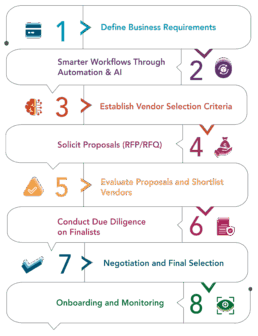
A clearly defined vendor selection process helps corporations reduce uncertainty and make informed, high stakes decisions with confidence. By following these key steps, from defining business needs to onboarding and monitoring, organizations can ensure that each vendor relationship is built on a foundation of due diligence, strategic fit, and long term value. In the next blog, we’ll explore how to optimize these processes further by embedding best practices that improve efficiency, compliance, and performance across the procurement lifecycle.