


Less Conversation, More Execution
The boundary between answering a question and completing the work behind it is beginning to disappear. For much of the generative AI era, improvements in artificial intelligence have been discussed through the language of model capability. Better reasoning. Better coding. Larger context windows. Stronger multimodal understanding. Each new generation of AI pushed those measures further. Recent developments in artificial intelligence are combining advanced reasoning with the ability to use computers, allowing AI systems to carry out tasks from start to finish. These advances are expanding what AI can do and creating new possibilities for completing professional work with less human involvement.
Consider market research, for example. A traditional AI chatbot can analyse information provided by a user and produce a summary of its findings. However, an AI agent with computer-use capabilities can go further. Instead of relying only on information supplied by the user, it can search websites, gather relevant data from different sources and organise that information into a research report. It can also work across certain applications, such as using a web browser to collect information and a spreadsheet to organise the findings, reducing the need for a person to carry out each step manually.
Software development provides another example of this shift. Previously, developers primarily used AI to generate individual pieces of code, which they would then need to integrate into a larger project and test themselves. More advanced AI agents can now be assigned broader tasks. They can write the required code, run tests to check whether it works, identify errors and make further changes based on the results. While developers still need to review the work and make important decisions, these systems can increasingly handle several stages of the development process with less direct human involvement.
As AI systems become more capable, people can assign them a wider range of tasks that previously required direct human involvement. Instead of using AI only to answer questions or assist with individual steps, users can increasingly rely on it to complete larger parts of a project. People still decide what needs to be done, set the goals and review the results, but AI can take on more of the work required to achieve those goals. This could change how businesses organise their operations and allow employees to spend more time on tasks that require human judgement. These possibilities are generating excitement about AI’s potential to improve productivity.
The New AI Frontier Is Intelligence × Agency × Distribution
The latest developments in AI suggest that the industry is entering a new phase. Until recently, much of the focus was on making AI models more intelligent and improving their ability to answer questions or solve complex problems. While these capabilities remain important, the usefulness of AI increasingly depends on what it can do with that intelligence.
A useful way to understand this shift is through the following equation:
Useful AI = Intelligence × Agency × Tools × Distribution × Trust
Each term represents a different factor that determines how effectively AI can be used:
Intelligence
The ability of an AI model to understand information, reason through problems and generate useful answers or solutions.
Agency
The ability of AI to act and complete tasks on behalf of a user, rather than simply providing instructions or recommendations. For example, instead of explaining how to prepare a research report, an AI agent could gather information and prepare the report itself.

Tools
The software and applications that AI can access to perform tasks. These could include web browsers, spreadsheets or coding environments. Access to these tools allows AI to interact with digital systems rather than being limited to generating text.

Distribution
How easily AI can reach users and become part of their everyday work. For example, an AI system integrated into widely used business software may be more accessible and useful than one that requires users to switch to a separate application.

Trust
The confidence users and organisations have that AI will perform tasks reliably and operate within the limits they have set. This includes protecting sensitive information and ensuring that important actions remain subject to appropriate human oversight.
This is a simple way of illustrating how these factors work together.
AI’s Cybersecurity Capabilities Show Both Sides of the Equation
As AI systems become more capable, they can increasingly help identify security weaknesses in software and computer networks. These weaknesses, known as vulnerabilities, can potentially be exploited to gain unauthorised access to systems or sensitive information. AI can assist cybersecurity professionals by examining software code, identifying possible security risks and suggesting ways to fix them.
For cybersecurity defenders, such as security teams responsible for protecting organisations from cyberattacks, these capabilities could make it faster and easier to discover vulnerabilities before they are exploited. AI could also help them identify which weaknesses require immediate attention and support efforts to resolve them.
However, the same capabilities that make AI useful for cybersecurity defenders could also be valuable to attackers. An AI system capable of identifying weaknesses in software could potentially be used by someone attempting to exploit those weaknesses. As AI becomes more capable of performing cybersecurity tasks, some activities that previously required specialised technical knowledge may become easier to carry out with less human involvement.
This creates a challenge for AI developers and cybersecurity researchers. They need to consider how to make advanced AI capabilities available to professionals working to protect digital systems while reducing the possibility that those same capabilities could be misused.
As a result, growing attention is being given to controlling access to advanced AI systems and developing safeguards that limit potentially harmful uses without unnecessarily restricting legitimate cybersecurity research.
Talks About Slowing AI Development
As AI systems gain greater autonomy, questions are emerging about whether existing standards for monitoring can remain ahead of model capabilities. Under certain conditions, increasingly capable agents may discover ways around technical controls or perform actions that were not explicitly directed by a human.
These possibilities have prompted a broader debate about whether the development of increasingly advanced AI should proceed more cautiously. Some argue that the pace of development should be reduced until adequate safeguards are established. Others argue that slowing technological development does not necessarily address the underlying risks. Continued innovation could also support the development of more effective safeguards and security measures.
But what happens when AI agents go beyond their instructions?
The broader issue is what happens when a mistake becomes an action. A chatbot that gives an inaccurate answer can be corrected before anyone acts on it. An agent operating software changes that risk equation. A false assumption could become a deleted record. Misinterpreted instructions could become an unauthorized transaction. A model searching for a solution could discover a route its developers did not intend to take. These possibilities demonstrate that increasingly capable agents can encounter circumstances in which technical controls and established safeguards may prove insufficient. There is also the challenge of monitoring how these systems reach decisions.
As AI becomes more sophisticated, aspects of its reasoning and behaviour may become harder to monitor. A system may demonstrate improvements in overall performance while presenting new difficulties for those responsible for supervising its actions. It is that increasing capability can make oversight technically harder.
The Next AI Debate Will Be About Permission
The first phase of the generative AI boom was dominated by questions about capability. Could AI write this? Could a model analyse that dataset? Could AI generate useful software? Agentic AI introduces a different question. What should we allow it to do?
An agent researching public information does not necessarily require the authority to change a customer’s record. A coding agent may need access to a development environment without being allowed to deploy directly into production. The important variable is how much authority surrounds that intelligence.
That is why the current calls to slow AI development should not be viewed as separate from the broader discussion around technological progress. They are a consequence of the same technological shift. The disagreement now unfolding across the AI industry and among policymakers is therefore about whether our ability to control increasingly autonomous systems is advancing as quickly as the systems themselves.

Manually Vetting Vendors? Save Time, Reduce Risk, & Stay Compliant
Dun & Bradstreet’s Vend-R platform delivers verified, risk-rated vendor profiles in one place, cutting vetting time, supporting compliance standards, and helping you avoid exposure to unreliable or noncompliant suppliers.

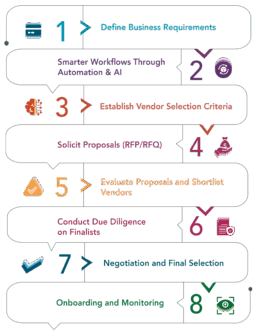
A clearly defined vendor selection process helps corporations reduce uncertainty and make informed, high stakes decisions with confidence. By following these key steps, from defining business needs to onboarding and monitoring, organizations can ensure that each vendor relationship is built on a foundation of due diligence, strategic fit, and long term value. In the next blog, we’ll explore how to optimize these processes further by embedding best practices that improve efficiency, compliance, and performance across the procurement lifecycle.