


AI is moving quickly into procurement and third-party risk workflows. It is being used to screen suppliers, review counterparties, monitor exposure, flag financial instability, and help teams decide which relationships need closer attention. That shift makes sense. Supplier networks are larger, more global, and harder to monitor manually. A procurement team may know the vendor it has contracted with but not always the ownership structure behind it or the concentration risk sitting underneath the supplier base.
AI can process more information than a human team can review alone. It can surface patterns faster and move supplier risk from periodic review to active monitoring. But AI is only as reliable as the data it is working from. If the records underneath are incomplete and outdated, AI does not remove the risk. Instead, it only makes the risk feel more manageable than it actually is.
Why Third-Party Risk is a Demanding Environment for AI
Third-party risk is difficult because supplier data rarely sits in one clean, consistent form. A single supplier may appear differently across organisational stakeholders.
The issue may be as small as:
- a spelling variation
- an old address
- a shortened trading name
- a missing registration number
- a parent company missing from the supplier file
Small gaps can change the answer when AI is trying to identify, match, and assess a business.
The risk environment is also becoming more complex. According to EY’s 2025 Global Third-Party Risk Survey, 57% of respondents consider operational risk when monitoring third parties, while another 57% cite financial risk. Cybersecurity and privacy risk follow at 54% each. The same survey notes that companies now need to look beyond direct third parties into fourth-party, fifth-party, and wider network exposure. [1]
That creates a hard test for AI. Before it can assess risk, it first needs to answer a basic question: which business are we actually looking at?
What happens when AI works from unreliable data
Poor data does not always produce an obvious error. Sometimes it produces a confident answer that looks right.
In supplier risk, unreliable data can lead to:

Incorrect entity matching
A supplier is matched to the wrong business profile.

Missed ownership exposure
Related entities are treated as separate companies.

Outdated financial assessment
A supplier appears stable because the record is no longer current.

Weak compliance screening
A trading name is not connected to the legal entity behind it.

Hidden concentration risk
Multiple suppliers look independent, but are linked through the same group structure.

Hidden concentration risk
Multiple suppliers look independent, but are linked through the same group structure.
The problem is not that AI fails to produce an output. The problem is that the output may rest on weak identity resolution or missing linkage data.
A 2025 report on AI-ready data found that 63% of organizations either do not have, or are unsure whether they have, the right data management practices for AI. It also predicts that through 2026, organizations will abandon 60% of AI projects that are not supported by AI-ready data. [2]
In supplier risk, that gap can affect onboarding, credit terms, exposure limits, compliance decisions, and continuity planning.
What Reliable AI-driven Third-party Risk Depends on
Reliable AI-driven supplier assessment begins before the model. It depends on whether the organization has a clear, current, and connected view of the businesses in its supplier network.
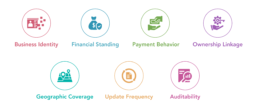
That means strengthening the data foundation around five areas:

Entity identification
AI needs to distinguish between similar company names, connect records across geographies, and understand when two records refer to the same business.
Current financial standing
Payment behavior, operating status, financial stress, and legal events need to be current enough to support real decisions.

Ownership and linkage visibility
Supplier networks are connected through parents, subsidiaries, affiliates, and beneficial owners. AI needs those connections to see exposure properly.

Geographic coverage
A supplier network that spans multiple markets needs data coverage that matches its footprint.

Explainability and audit trail
Teams need to know why a supplier was approved, escalated, or rejected.
This is where business intelligence and supplier management tools matter in the AI conversation. AI should not be treated as a shortcut around supplier intelligence. It should sit on top of stronger supplier intelligence.
Why this Matters for Mature AI Operations
Procurement leaders are already investing in this shift. A 2025 global procurement survey found that top-performing digital procurement teams allocate up to 24% of their budgets to procurement technology. It also found that top procurement organizations achieve three times greater returns on GenAI investments compared with peers. [3]
But technology investment alone is not maturity.
Maturity is the ability to move faster without losing control. In supplier risk, that means AI outputs need verified identity, current risk signals, ownership visibility, and a decision trail the business can defend.
The stakes are immediate:
- A missed signal can affect continuity.
- A weak counterparty can affect cash flow.
- A hidden ownership link can affect compliance.
- An unexplained automated decision can weaken trust in procurement governance.
The real test
The organizations that get this right will not simply add AI to fragmented supplier records. They will first strengthen the data layer beneath it:
That is what separates useful AI from risky automation.
Before AI can help decide who to work with, how much exposure to accept, or how much risk to allow, the business needs a clearer view of the counterparty itself. Who are they? How are they connected? What risk do they carry today? Is the data current enough to trust?
In supplier risk, those are not background questions. They are the foundation.
Manually Vetting Vendors? Save Time, Reduce Risk, & Stay Compliant
Dun & Bradstreet’s Vend-R platform delivers verified, risk-rated vendor profiles in one place, cutting vetting time, supporting compliance standards, and helping you avoid exposure to unreliable or noncompliant suppliers.

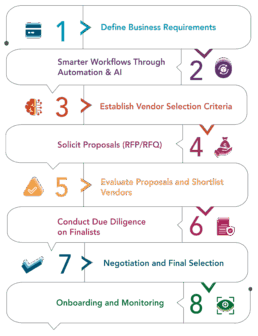
A clearly defined vendor selection process helps corporations reduce uncertainty and make informed, high stakes decisions with confidence. By following these key steps, from defining business needs to onboarding and monitoring, organizations can ensure that each vendor relationship is built on a foundation of due diligence, strategic fit, and long term value. In the next blog, we’ll explore how to optimize these processes further by embedding best practices that improve efficiency, compliance, and performance across the procurement lifecycle.